“A strong building starts with a foundation designed for the ground it stands on.”








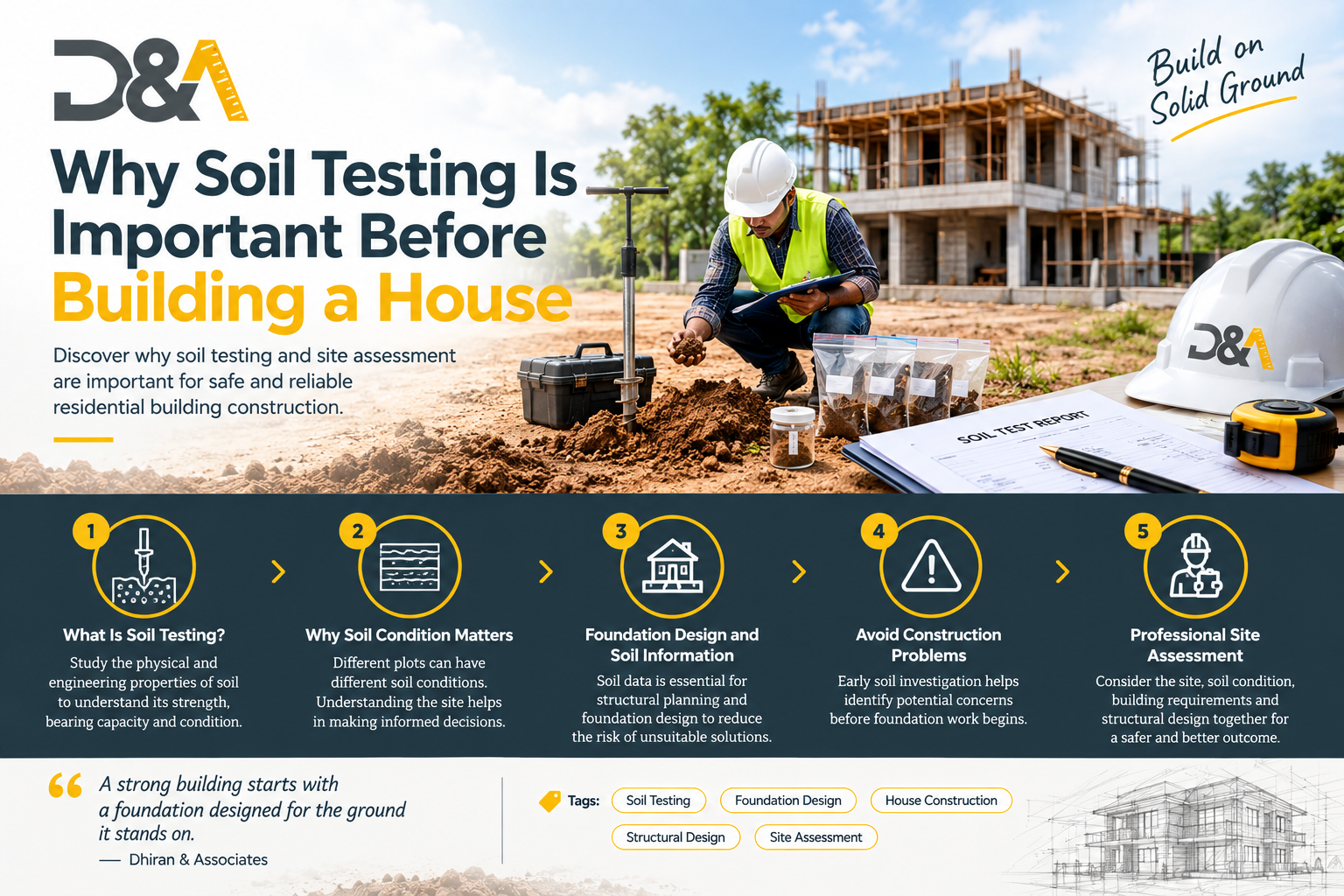
Before constructing a house, homeowners often focus on the floor plan, elevation and construction budget. However, the ground beneath the building is equally important. Soil testing provides valuable information about the site condition and helps engineers make appropriate structural decisions for the proposed building.
Soil testing is the process of studying the physical and engineering properties of the soil at a construction site. It helps identify characteristics such as soil strength, bearing capacity and other conditions that may influence the foundation design.
Different plots can have different soil conditions even when they are located in the same area. Weak or problematic soil may require specific foundation solutions. Understanding the site condition before construction can help engineers make informed structural decisions.
The foundation transfers the building load to the ground. Soil information is therefore an important input for structural planning and foundation design. Proper site investigation can help reduce the risk of unsuitable foundation decisions.
Starting construction without understanding the site can create difficulties later. Proper soil investigation and engineering assessment can help identify potential concerns before foundation work begins.
A complete construction planning process should consider the site, soil condition, building requirements and structural design together. Professional assessment helps ensure that the design and construction approach are appropriate for the specific project.


“A strong building starts with a foundation designed for the ground it stands on.”
Dhiran & Associates